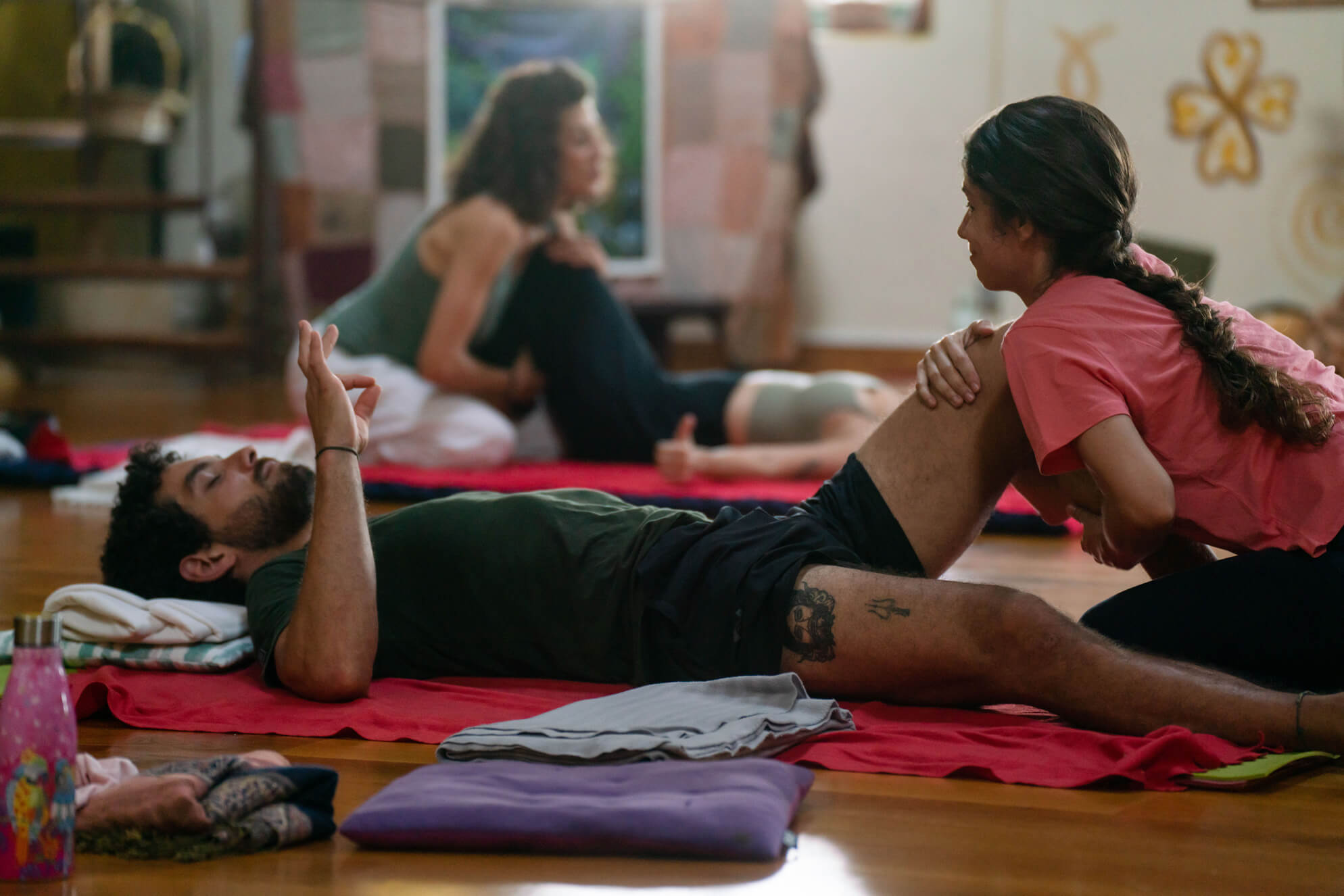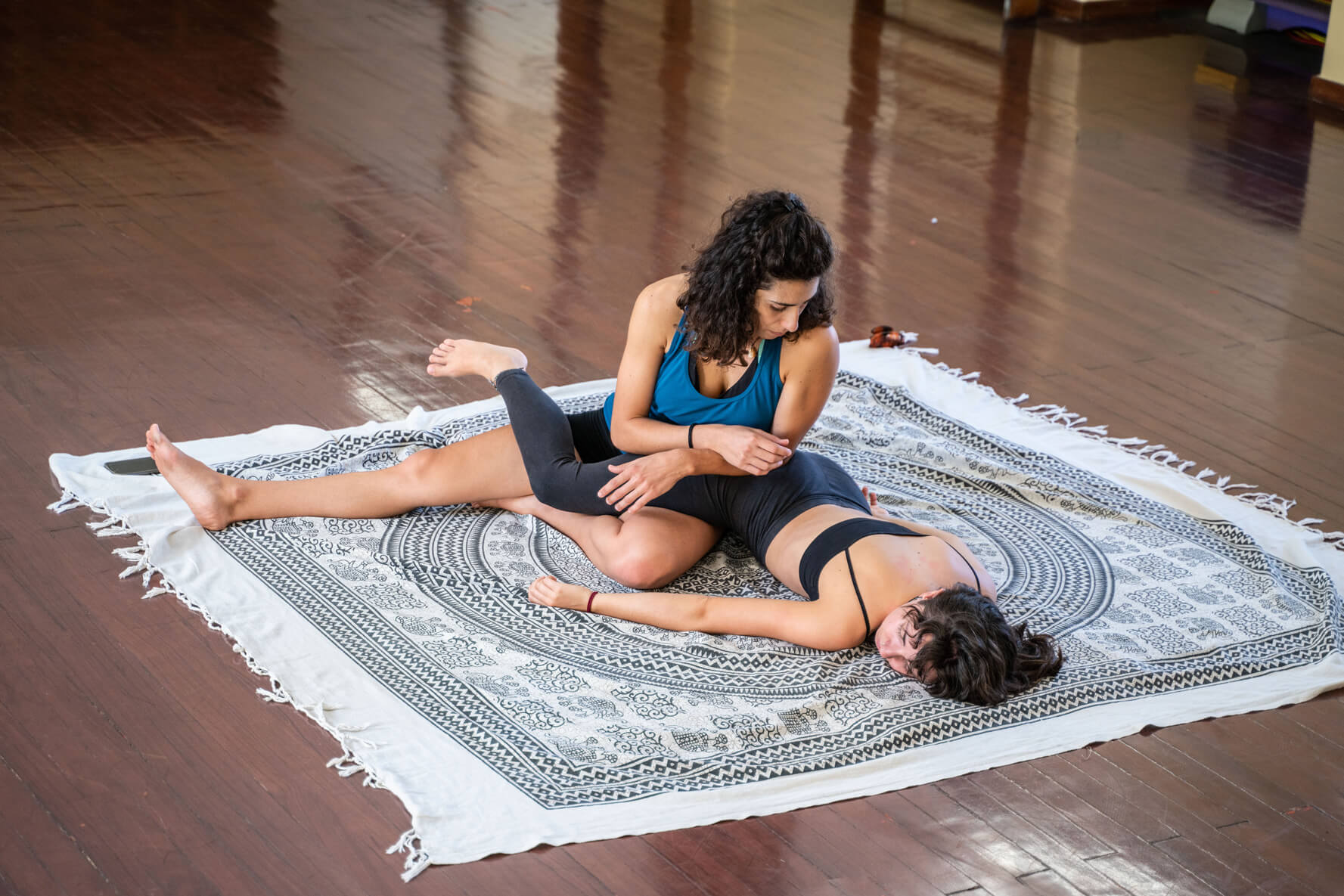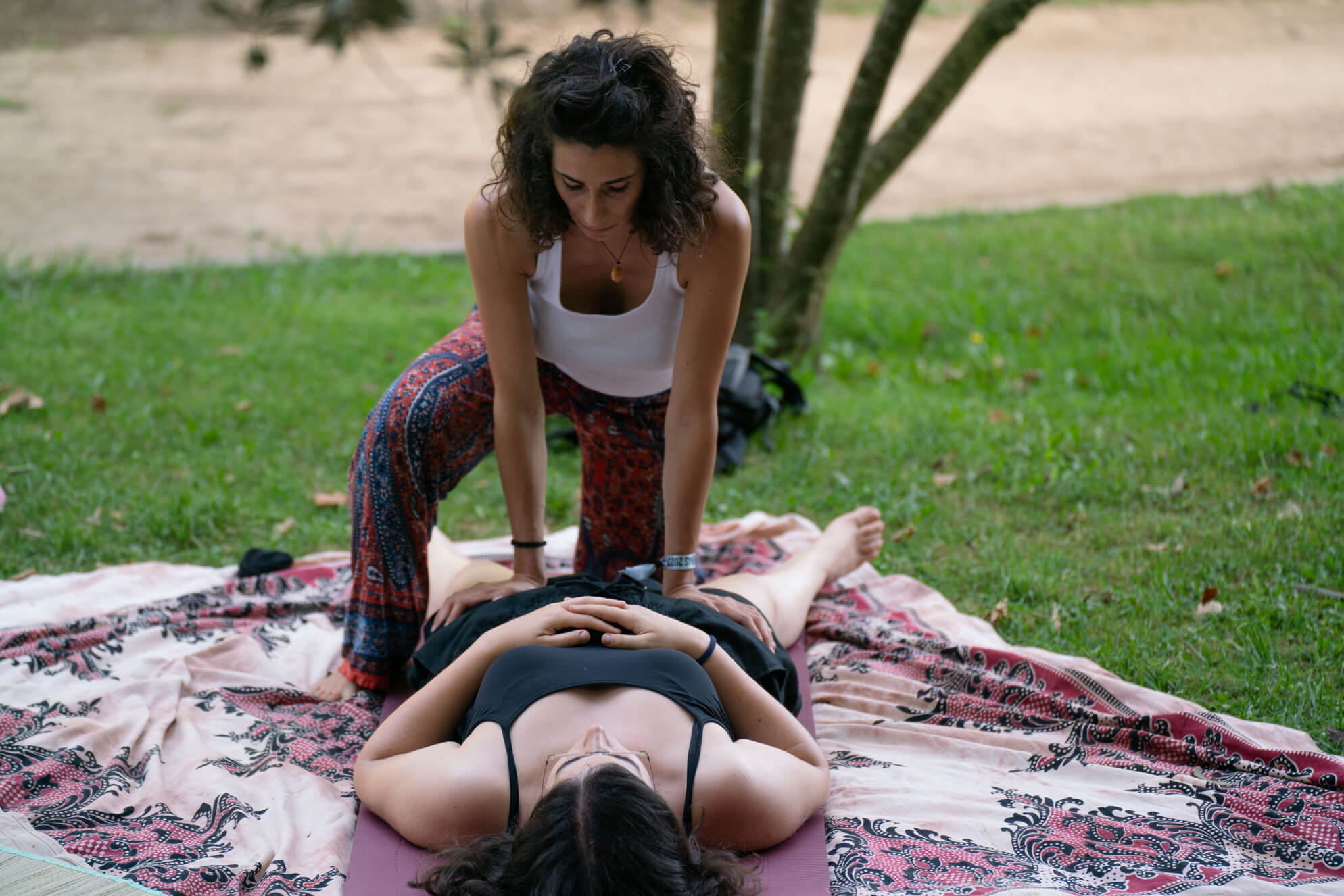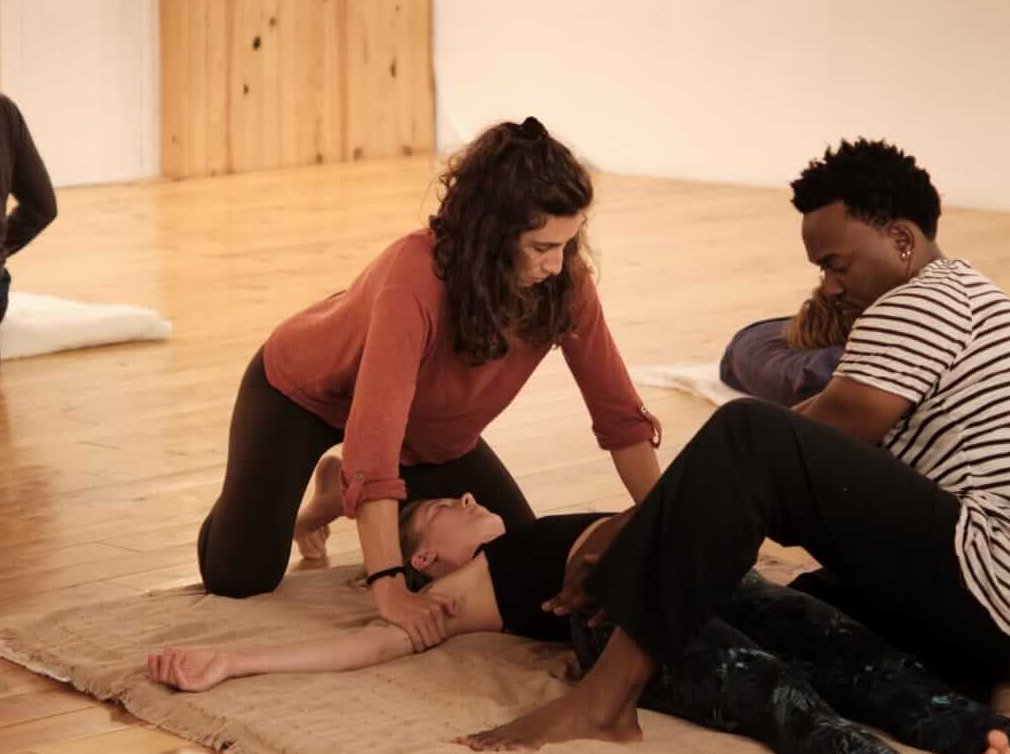
O que é?
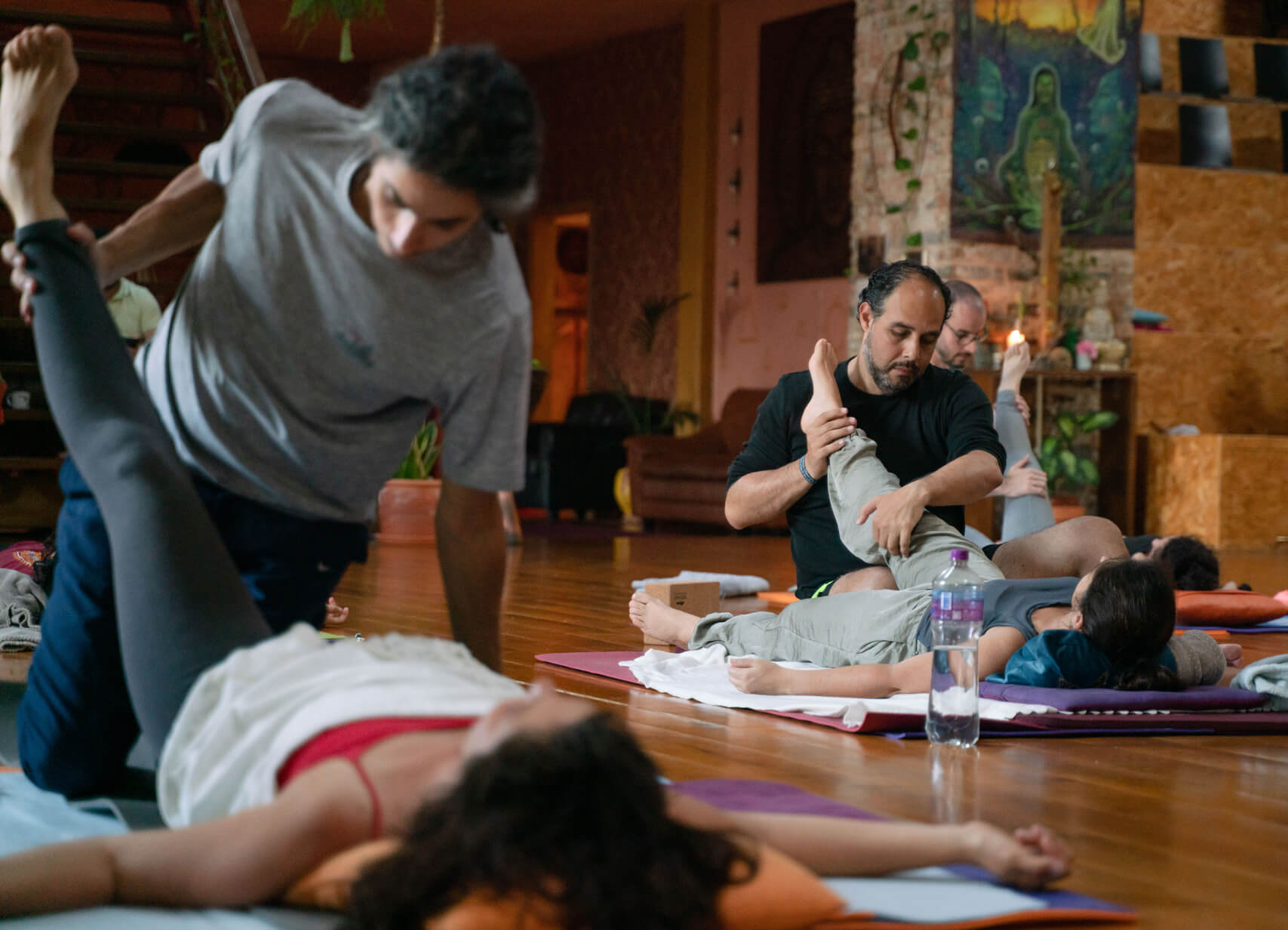
A massagem tailandesa é uma prática extremamente rica, tanto a nível técnico, pela antiguidade do conhecimento dos meridianos e das linhas energéticas que lhe estão subjacentes, como no plano espiritual: a sua base assenta na tradição budista e nos princípios fundamentais de Metta (bondade amorosa), Atenção Plena e conhecimento das linhas de energia (Sen).
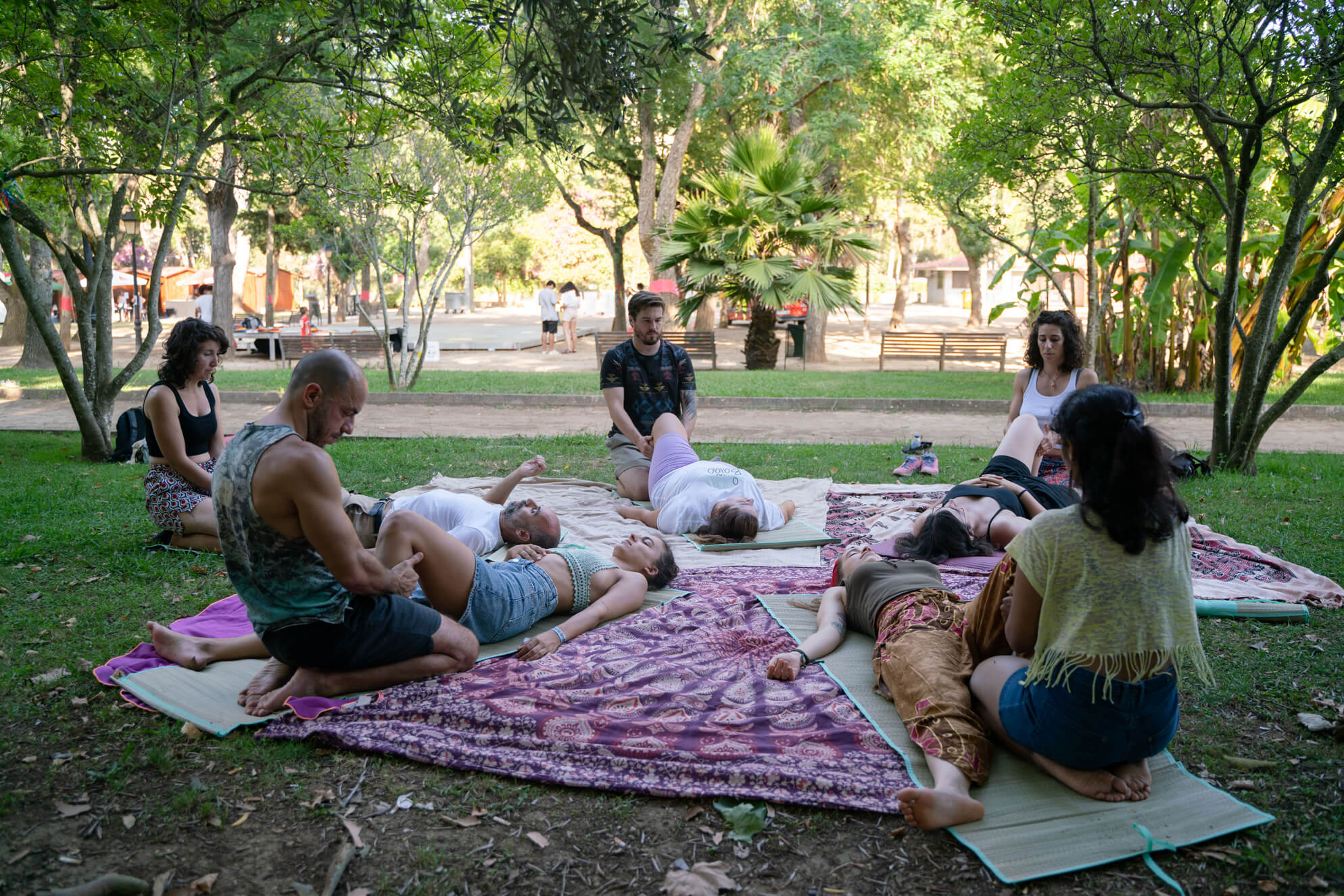
Uma das características desta arte é o uso não só de pressão, mas também de técnicas de alongamento passivo para aliviar a tensão, promover o relaxamento, melhorar a flexibilidade e a circulação.
Sendo formada em Medicina, desde 2020 utilizo a massagem tailandesa como ferramenta terapeutica complementar quer em sessões individuais ou de grupo (workshops e curso introdutivos).
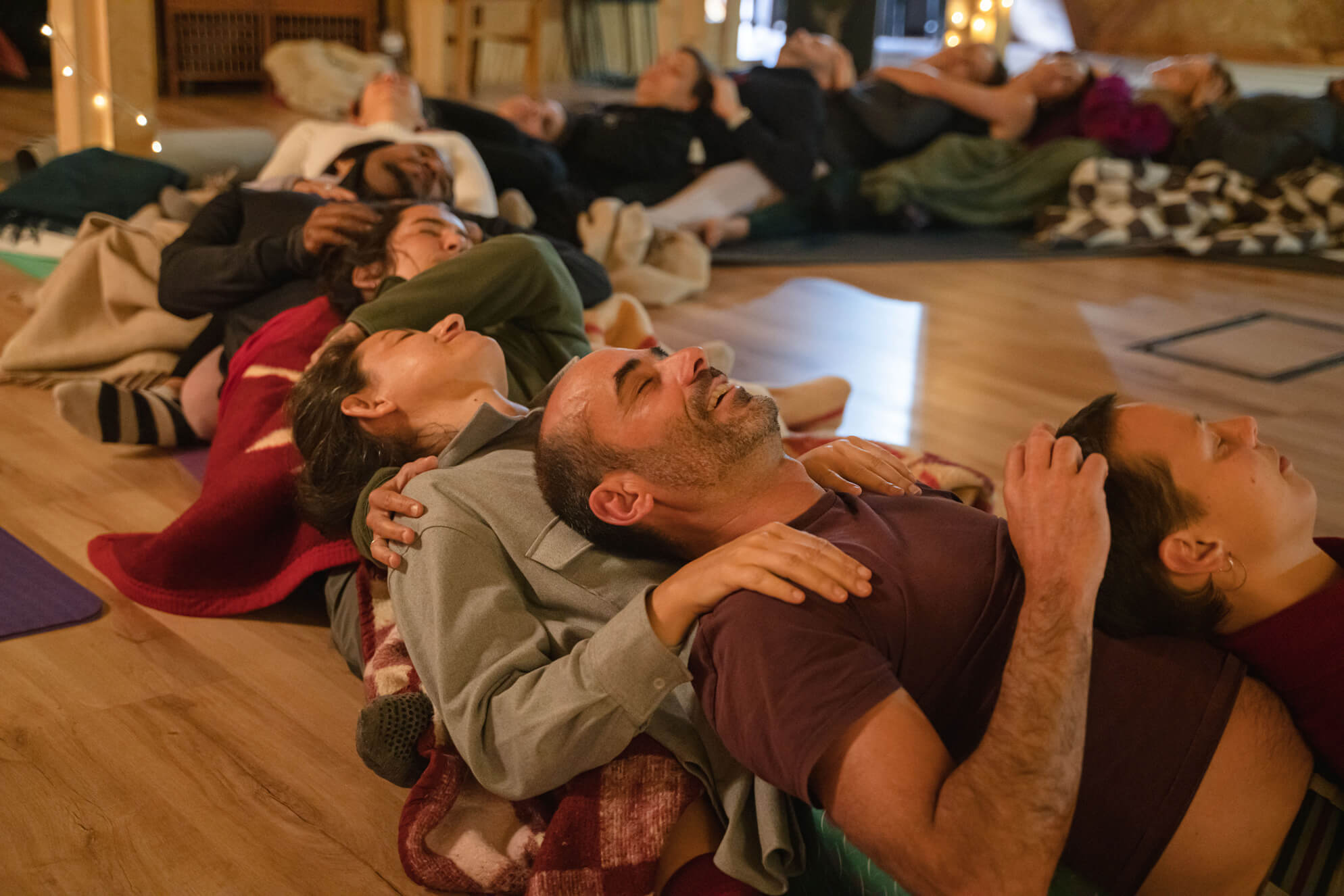
Esta modalidade de massagem, que pode ser tanto subtil como profunda, promove um estado de presença e atenção plenas, conduzindo a um relaxamento profundo. Esse estado é essencial para melhorar a flexibilidade, aliviar tensões musculares e contribuir para o equilíbrio geral do indivíduo.
massagem individual
Vem experimentar em primeira pessoa os beneficios desta antiga arte.
As sessões decorrem com o cliente vestido com roupa confortável, de modo a permitir uma mobilização adequada. A massagem pode ser realizada em futon no chão ou em maca, sendo habitualmente efetuada sem recurso a óleos.
Atendimento mediante marcação prévia, com possibilidade de sessões ao domicílio ou em estúdio em Lisboa, conforme avaliação e disponibilidade.
Entra em contacto para marcar já a tua sessão!
Massagem 60 minutos (preço base) - 60€
Massagem 90 minutos (preço base) - 85€
Disponíveis packs com condições especiais e preços reduzidos, sob consulta.
O preço base apresentado poderá sofrer alterações consoante o local da marcação ou caso o serviço seja realizado ao domicílio.
Qualquer ajuste será comunicado previamente no momento da reserva.
onde me encontraR
Area de atuação para domicilios:
Lisboa centro, Odivelas, Loures (para outras zonas aplica-se um custo extra para as despesas de deslocação)
EXCELENTETrustindex verifica se a fonte original da avaliação é Google. I had a wonderful massage experience. Egle was very professional, mindful and made sure I was comfortable during the session. And the place was calm and relaxing. I felt very aligned after. Will definitely come back.Publicado emTrustindex verifica se a fonte original da avaliação é Google. Tive a oportunidade de fazer uma massagem ontem com a Egle e não tenho nem palavras para descrever o quanto foi transformador para mim! Estava quase com um torcicolo e saí de lá sem dores nenhumas. Normalmente tenho medo que me façam massagem nos pés porque sofro imenso (dou aulas de dança), mas com ela não me doeu nada. Foi um reset completo. Recomendo muito que experimentem e que permitam que ela vos guie nessa 1h para um estado meditativo e de cura. Estou viciada e já quero marcar as próximas :D Para além da massagem ter sido incrível, o espaço também é maravilhoso, super bonito, limpo e central. Obrigada Egle!Publicado emTrustindex verifica se a fonte original da avaliação é Google. Maravilhosa massagem! Adorei. Muito bom para relaxar e libertar tensões! Recomendo muito. A Egle é super atenciosa e profissional.Publicado emTrustindex verifica se a fonte original da avaliação é Google. Egle is a wonderfully skilled massage therapist and such a lovely human! Her service, care, attention and soft presence are so valuable! Highly highly recommend her work!🤎Publicado emTrustindex verifica se a fonte original da avaliação é Google. Sobre as sessões, não é a primeira, nem a segunda, nem a terceira vez que tenho essa experiência e cada uma delas me surpreende, pois ela parece mesmo ter mãos mágicas, o toque vai mesmo onde o corpo e a mente agradecem, acessam lugares com a leveza e a força que se equilibram. Sobre a Egle, um dos seres do ouvir e do sentir mais genuínos que já conheci. Obrigada por Ser... o mundo precisa de mais toques que falam e ouvidos que veem como os seus. Gratidão.Publicado emTrustindex verifica se a fonte original da avaliação é Google. A few days ago I got a wonderful massage from Egle. It was the first time I had a Thai massage and it was absolutely thrilling!! The clinic is very calm and welcoming and located in a quiet street. So, it was easy to feel comfortable. Egle is so welcoming and has golden hands! She used a lot of movements that helped me to release tension in well-known and unknown places of my body. When I left the clinic I felt so much lighter than before and I noticed that I was smiling. A real treat!!!Publicado emTrustindex verifica se a fonte original da avaliação é Google. I have had the huge pleasure to receive multiple massages from Egle. Not only is she extremely skilled and trained in understanding the joints and muscles and common places of tension (with her background as a medical doctor) but her presence is so calming and healing for me. She is truly the kind of person who has an extraordinary way with her hands and her whole body which she uses to bring my body and my mind back into balance. I look forward to my next session with her!
Se quiseres ficar a par dos próximos eventos e workshops, a melhor forma é subscrever a newsletter mensal.
Assim mantemo-nos em contacto,
e prometo: nada de spam!
Curso de introdução
Ganha as ferramentas para dar os primeiros passos no universo do thai-massage
Próxima data
Janeiro a Março 2024 (3 meses)
Local: Quinta das Patas – Colares, Sintra
Periodicidade: 4 modulos individuais
Horário: 19:00 ás 21:30
Vagas limitadas a 10 participantes